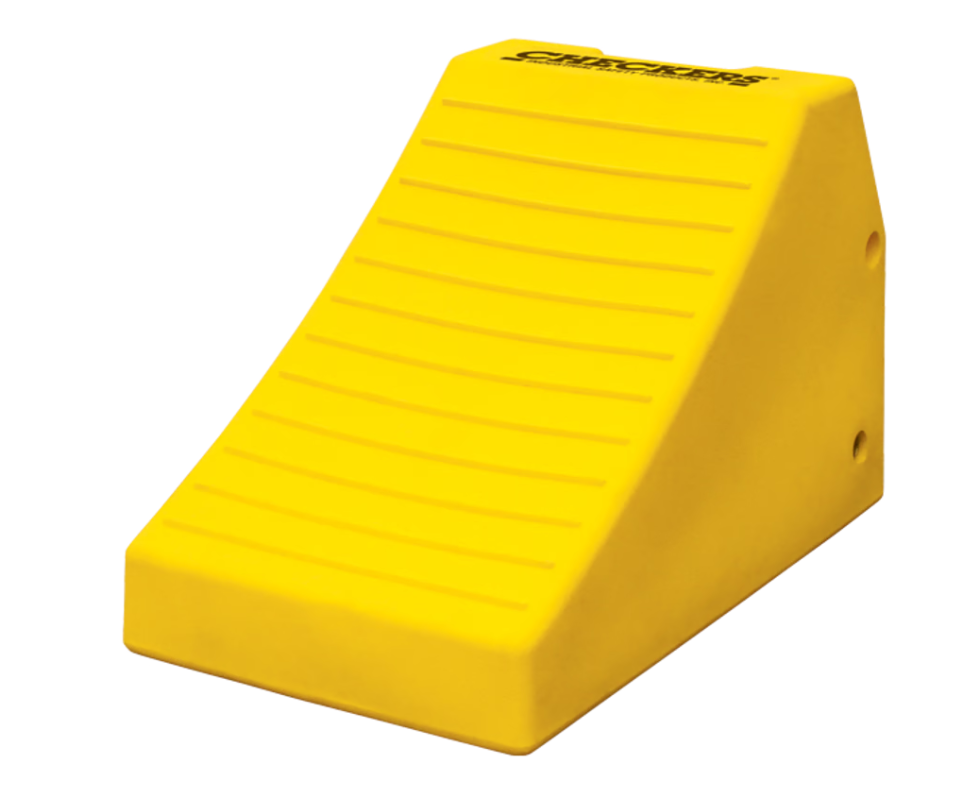

A wheel chock is a wedge‑shaped block made from sturdy materials like rubber, metal, or urethane that’s placed against the wheels of a vehicle to prevent it from accidentally rolling or moving when parked or stationary.
In simpler terms: it’s a safety device you set in front of or behind wheels so they can’t slip — especially important when a vehicle is stopped on a slope, being loaded/unloaded, or parked at a dock.
🛠️ Why Are Wheel Chocks Important?
Although small and inexpensive, wheel chocks play a big role in safety — especially in industrial or warehouse settings. They act as a backup to a vehicle’s brakes, helping prevent accidents that can occur when heavy trucks, trailers, or equipment move unintentionally.
At loading docks, wheel chocks are part of safety routines because even a slight shift in position can cause serious injury or damage during loading and unloading operations.
🧰 How Wheel Chocks Work
-
The wedge shape fits snugly against the wheel, creating resistance to rolling.
-
Some have rubber bottoms or textured surfaces so they grip the ground better.
-
They can be used either in front of or behind a wheel, depending on the direction you want to block movement.
🧱 Common Types of Wheel Chocks
The blog on A Plus Warehouse highlights many styles, including:
-
Rubber chocks – resistant to weather and tearing.
-
Steel or cast steel chocks – strong and durable for heavy loads.
-
Aluminum extruded chocks – lightweight yet strong.
-
Urethane chocks – sturdy with good grip.
-
Aircraft chocks – designed specifically for airplanes, often with reflective tape.
Each type is suitable for different vehicles and environments, but the basic purpose is always the same: keep wheels from rolling.
🚚 Where Wheel Chocks Are Used
Wheel chocks are widely used in:
-
Loading docks (to secure trailers)
-
Garages and workshops
-
Airfields (around aircraft wheels)
-
Construction sites
-
Anywhere vehicles might roll unintentionally