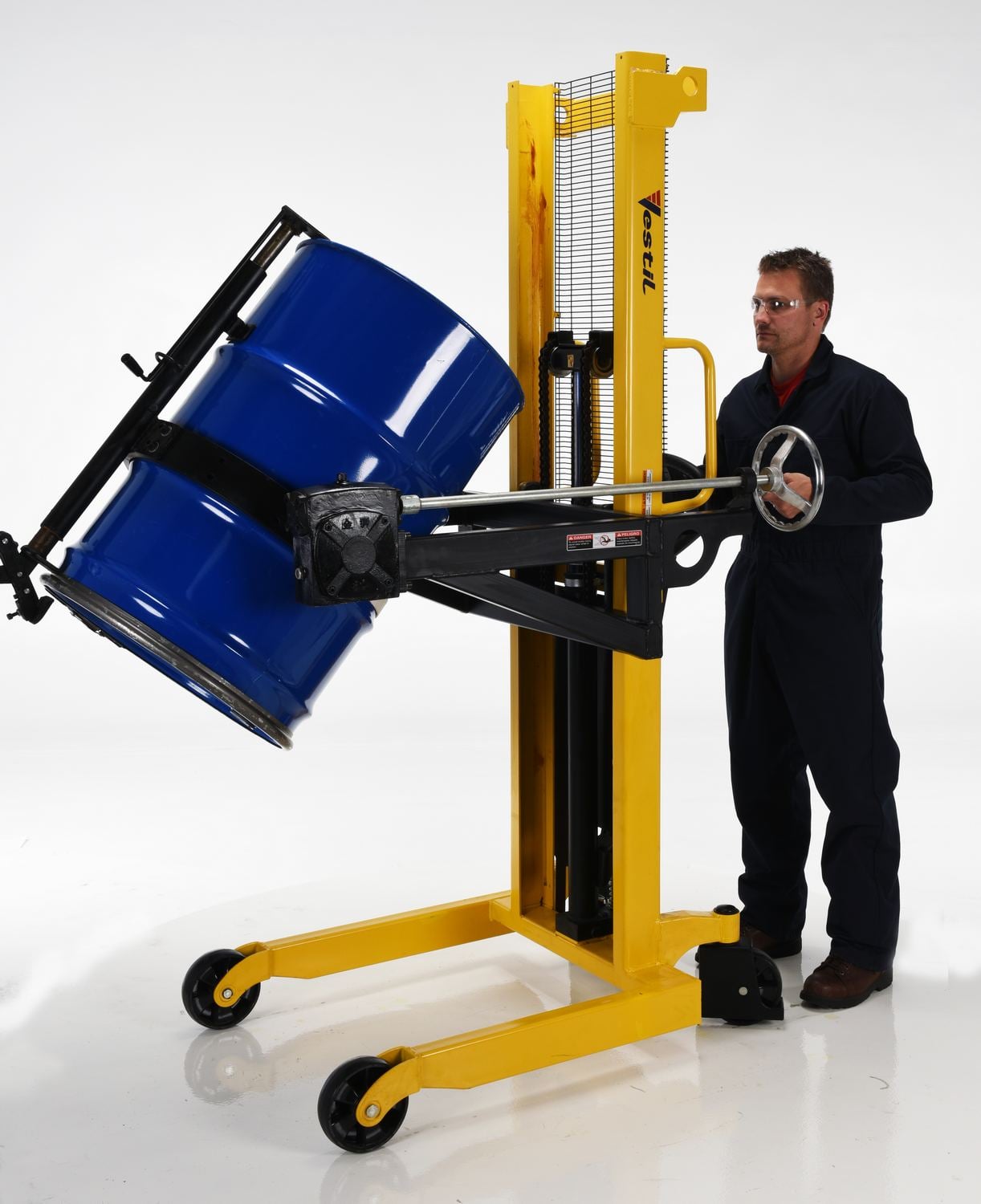

Industrial drums are used across countless industries to store and transport liquids, chemicals, oils, and other materials. While drums are highly effective storage containers, they can also present significant safety hazards when handled improperly. A single mistake can lead to spills, injuries, damaged products, or costly regulatory violations.
Whether your facility handles a few drums or hundreds, following proper drum handling procedures is essential for maintaining a safe and productive workplace.
Common Drum Handling Mistakes
1. Moving Drums Manually
One of the most common mistakes is attempting to move drums by rolling, dragging, or manually lifting them. A standard 55-gallon drum can weigh hundreds of pounds when full, making manual handling dangerous and inefficient.
Potential risks include:
- Back strains and musculoskeletal injuries
- Crushed fingers and toes
- Loss of control resulting in spills
- Damage to drum contents
Instead of relying on manual labor, facilities should utilize drum transporters, drum trucks, and drum handling equipment designed specifically for the task.
2. Using the Wrong Equipment
Not all material handling equipment is suitable for moving drums. Using pallet jacks, forklifts, or carts that are not designed for drum handling can create unstable loads and increase the risk of accidents.
Purpose-built drum handling equipment helps operators safely lift, transport, and position drums while maintaining control throughout the process.
3. Improper Drum Storage
Drums stored incorrectly can create safety concerns and waste valuable floor space.
Common storage errors include:
- Stacking drums improperly
- Storing drums on uneven surfaces
- Blocking aisles and emergency exits
- Failing to secure drums on racks
Using drum racks and designated storage systems can help keep drums organized, accessible, and secure.
4. Ignoring Drum Condition
Before moving or storing a drum, employees should inspect it for signs of damage.
Look for:
- Dents or punctures
- Corrosion or rust
- Leaking seals
- Bulging sides
Damaged drums should be addressed immediately to prevent spills and contamination.
5. Lack of Spill Preparedness
Even with proper handling procedures, accidents can happen. Facilities that store liquids or hazardous materials should have spill containment measures in place.
Secondary containment systems, spill pallets, and absorbent materials can help minimize environmental and workplace hazards if a leak occurs.
Best Practices for Safe Drum Handling
Train Employees Properly
Employees should understand:
- Safe lifting and moving procedures
- Equipment operation requirements
- Spill response protocols
- Hazard communication guidelines
Regular training helps reinforce safe practices and reduce preventable accidents.
Use Specialized Drum Handling Equipment
Investing in proper equipment improves both safety and efficiency.
Popular solutions include:
- Drum transporters
- Drum dollies
- Drum lifters
- Drum racks
- Drum rotators
- Drum heaters
- Spill containment pallets
The right equipment reduces physical strain on workers while increasing productivity.
Maintain Clear Travel Paths
When transporting drums, operators should use designated travel routes that are free from clutter, debris, and unnecessary obstacles.
Clear pathways help prevent collisions, tip-overs, and accidental damage to drums.
Follow Weight Capacity Guidelines
Every piece of handling equipment has a rated capacity. Exceeding these limits can result in equipment failure and serious injuries.
Always verify the weight of a loaded drum and ensure handling equipment is properly rated for the load.
Implement Regular Safety Inspections
Routine inspections of both drums and handling equipment can identify potential issues before they become costly problems.
A proactive inspection program can help:
- Reduce downtime
- Extend equipment life
- Prevent spills
- Improve overall workplace safety
Choosing the Right Drum Handling Equipment
The best drum handling solution depends on your application. Factors to consider include:
- Drum size and weight
- Frequency of movement
- Storage requirements
- Indoor versus outdoor use
- Hazardous material considerations
Facilities that frequently move drums often benefit from dedicated drum transporters and drum lifters, while operations focused on storage may prioritize drum racks and containment systems.
Final Thoughts
Safe drum handling is about more than compliance—it's about protecting employees, products, and your facility. By avoiding common mistakes and implementing proven best practices, businesses can reduce workplace injuries, improve efficiency, and create a safer working environment.
Whether you're moving, storing, heating, or dispensing drums, having the right equipment and procedures in place makes all the difference. Investing in proper drum handling solutions today can help prevent costly accidents tomorrow.
Check out oru Drum Handling Equipment!