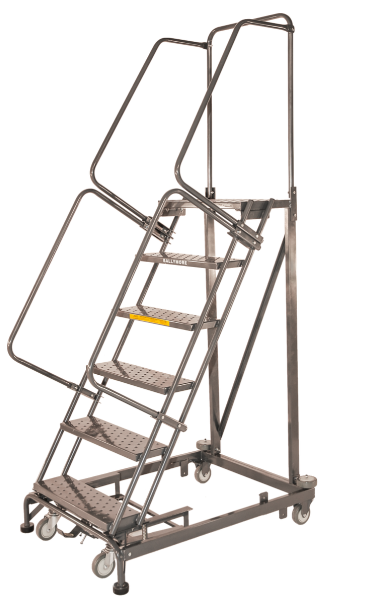

Ladders are one of the most frequently used pieces of equipment in warehouses, manufacturing plants, distribution centers, maintenance departments, and construction sites. While they may seem simple, improper ladder selection or misuse can lead to serious injuries. For businesses operating in California, understanding Cal/OSHA ladder requirements is an important part of maintaining a safe workplace.
At A Plus Warehouse, we offer a wide selection of industrial ladders designed to help businesses work safely and efficiently while meeting demanding workplace applications.
What Is Cal/OSHA?
Cal/OSHA (California Occupational Safety and Health Administration) enforces workplace safety regulations throughout California. While many of its ladder requirements are similar to federal OSHA standards, California includes additional regulations covering ladder selection, inspection, maintenance, and employee training.
Employers are responsible for providing ladders that are appropriate for the job and ensuring employees know how to use them safely.
Cal/OSHA Ladder Safety Basics
Whether you're using a rolling ladder in a warehouse or an extension ladder on a job site, several fundamental safety practices apply:
- Inspect ladders before every use.
- Remove damaged ladders from service immediately.
- Always place ladders on stable, level surfaces.
- Maintain three points of contact while climbing.
- Face the ladder when ascending or descending.
- Use the ladder only for its intended purpose.
- Select a ladder with the proper duty rating and working load.
- Never stand on prohibited top steps or top caps of step ladders.
Routine inspections are essential for identifying loose hardware, damaged rails, worn feet, or missing labels before they become safety hazards.
Selecting the Right Ladder
Not every ladder is designed for every application. Choosing the proper ladder improves both safety and productivity.
Rolling Safety Ladders
Ideal for:
- Warehouses
- Stockrooms
- Distribution centers
- Retail inventory areas
Rolling ladders provide stable access to shelving and pallet rack systems while allowing workers to move efficiently throughout the facility.
Step Ladders
Best for:
- General maintenance
- Offices
- Light industrial work
- Facility management
Step ladders are self-supporting and require no wall for support, making them one of the most versatile ladder options.
Extension Ladders
Perfect for:
- Building maintenance
- Outdoor work
- Roof access
- Utility applications
Extension ladders should always be set at the proper climbing angle and extend above the landing surface when used for roof access.
Platform Ladders
For jobs requiring workers to remain in one location for extended periods, platform ladders provide additional comfort and stability with larger standing platforms and guardrails.
Proper Ladder Inspection
One of the easiest ways to improve workplace safety is performing ladder inspections before every use.
Look for:
- Bent or cracked rails
- Loose or missing fasteners
- Damaged steps or rungs
- Worn slip-resistant feet
- Damaged locking mechanisms
- Missing safety labels
If any damage is found, the ladder should be removed from service until repaired or replaced.
Common Ladder Mistakes
Many workplace ladder accidents occur because of improper use rather than equipment failure.
Some common mistakes include:
- Standing on the top cap of a step ladder
- Using a damaged ladder
- Exceeding the ladder's weight capacity
- Carrying large objects while climbing
- Placing ladders on uneven surfaces
- Using the wrong ladder for the application
- Moving a ladder while someone is standing on it
Avoiding these simple mistakes can dramatically reduce the risk of falls.
Why Ladder Quality Matters
Commercial-grade ladders are built to withstand daily industrial use. Features such as heavy-duty construction, slip-resistant steps, locking casters, oversized platforms, and higher weight capacities help improve both durability and worker confidence.
Investing in quality ladders can also reduce downtime caused by damaged equipment and improve overall workplace efficiency.
Find the Right Ladder at A Plus Warehouse
Whether you need rolling ladders, warehouse ladders, platform ladders, or heavy-duty industrial access equipment, A Plus Warehouse offers solutions for a wide variety of applications.
Our team can help you select the proper ladder based on your facility, working height, load requirements, and industry. The right ladder not only helps improve productivity—it also plays an important role in creating a safer workplace.
Browse our complete selection of industrial ladders today and let our experienced team help you find the best solution for your application.
Check out our Rolling Ladders!