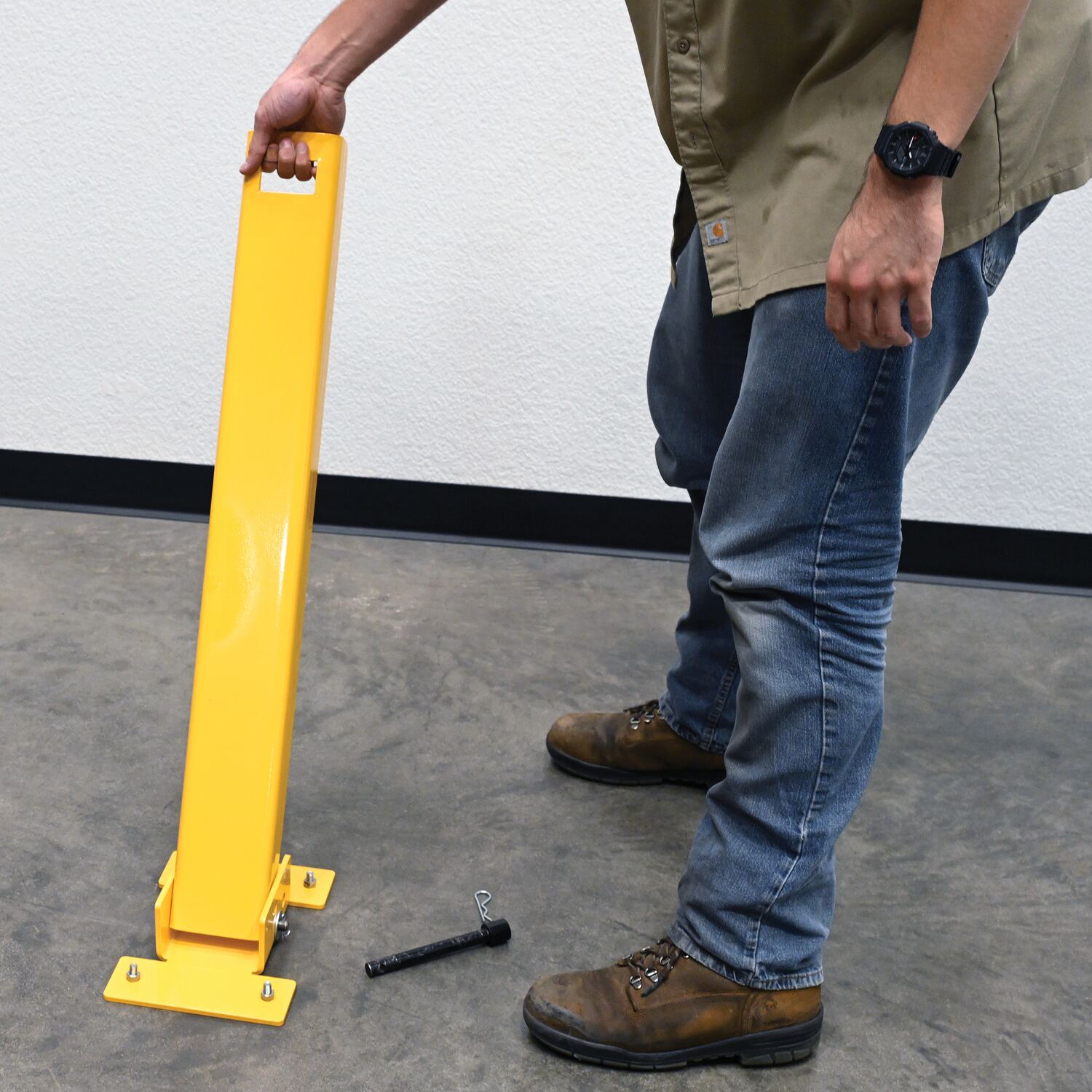

When it comes to protecting your facility, managing traffic, and improving safety, bollards are one of the most versatile and effective solutions available. From warehouses and loading docks to parking lots and storefronts, bollards serve as a first line of defense against accidental impacts and unauthorized vehicle access.
But not all bollards are created equal. Understanding the different types of bollards can help you choose the right solution for your specific application.
What Are Bollards?
Bollards are short, vertical posts designed to control or direct traffic, protect structures, and enhance safety in both indoor and outdoor environments. They are widely used in industrial settings to prevent collisions, protect equipment, and safeguard personnel.
1. Fixed Bollards (Permanent Protection)
Fixed bollards are permanently installed into the ground, making them one of the most secure and durable options available.
Best for:
-
Warehouse perimeters
-
Storefront protection
-
Loading docks
-
Equipment and rack protection
These bollards are typically made of steel or concrete and are designed to withstand heavy impacts.
2. Removable Bollards (Flexible Access)
Removable bollards provide security when needed but can be taken out to allow vehicle access.
Best for:
-
Delivery zones
-
Emergency access points
-
Temporary restricted areas
They are ideal for facilities that require both security and flexibility.
3. Retractable Bollards (On-Demand Control)
Also known as telescopic bollards, retractable bollards can be lowered into the ground when access is needed and raised when restriction is required.
Best for:
-
Loading areas
-
Private driveways
-
Controlled entry points
Some models are manual, while others are automated for convenience and security.
4. Automatic Bollards (High-Security Solutions)
Automatic bollards operate using hydraulic or electric systems and can be controlled remotely or integrated into access control systems.
Best for:
-
High-security facilities
-
Government buildings
-
Industrial complexes
These are commonly used where controlled access is critical.
5. Safety Bollards (Warehouse Protection)
Safety bollards are the most common type used in warehouses and industrial environments. They are typically brightly colored (often yellow) to increase visibility and prevent accidents.
Best for:
-
Protecting racking systems
-
Guarding machinery
-
Separating pedestrian walkways
They help reduce workplace accidents and equipment damage.
6. Flexible or Polymer Bollards (Impact-Resistant)
Flexible bollards are designed to absorb impact and return to their original shape, making them ideal for high-traffic areas.
Best for:
-
Forklift-heavy environments
-
Parking areas
-
Areas with frequent minor collisions
Unlike steel, polymer bollards can withstand repeated impacts without needing replacement.
7. Surface-Mounted Bollards (Quick Installation)
Surface-mounted bollards are bolted directly onto concrete surfaces rather than embedded into the ground.
Best for:
-
Indoor facilities
-
Light-duty protection
-
Retrofit applications
They are easier to install but generally offer less impact resistance than in-ground bollards.
8. Decorative Bollards (Aesthetic + Function)
Decorative bollards combine functionality with visual appeal. While they may not offer heavy-duty protection, they help guide traffic and enhance the look of a space.
Best for:
-
Retail environments
-
Public spaces
-
Office buildings
Some decorative options can be installed over reinforced cores for added protection.
9. Crash-Rated Bollards (Maximum Security)
Crash-rated or anti-ram bollards are engineered and tested to withstand high-impact collisions, including vehicle attacks.
Best for:
-
Critical infrastructure
-
Airports and government facilities
-
High-risk security zones
These bollards meet strict safety standards and provide the highest level of protection.
Choosing the Right Bollard
Selecting the right bollard depends on your specific needs:
-
For maximum protection: Fixed or crash-rated bollards
-
For flexibility: Removable or retractable bollards
-
For warehouse safety: Steel or polymer safety bollards
-
For aesthetics: Decorative bollards
Factors like traffic volume, vehicle size, and installation environment should all play a role in your decision.
Check out our Bollards!