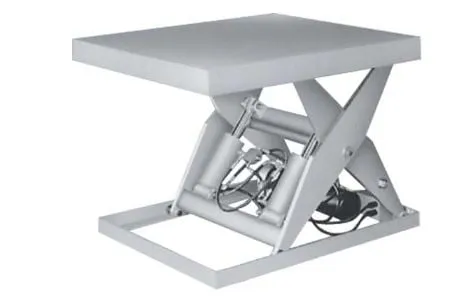

In industries where hygiene, durability, and workplace safety are essential, stainless steel scissor lifts offer a reliable solution for elevated work and material handling. Designed to provide stable vertical access in demanding environments, these specialized lifts combine the functionality of traditional scissor lifts with the corrosion resistance and easy-to-clean properties of stainless steel.
From food processing facilities and pharmaceutical plants to cleanrooms and commercial kitchens, stainless steel scissor lifts help businesses maintain efficient operations while meeting strict cleanliness and safety requirements.
In this blog, we'll explore what stainless steel scissor lifts are, their key benefits, common applications, and the factors to consider when choosing the right model for your facility.
What Is a Stainless Steel Scissor Lift?
A stainless steel scissor lift is a vertical lifting platform designed with stainless steel components to provide corrosion resistance and support operation in environments where cleanliness is critical. Like conventional scissor lifts, it uses a folding, crossed-support mechanism that extends and retracts to raise or lower a platform.
Depending on the application, stainless steel may be used for the platform, frame, scissor mechanism, hydraulic components, fasteners, or other exposed surfaces. Some models are constructed primarily from stainless steel, while others feature stainless steel contact surfaces and selected corrosion-resistant components.
These lifts are available in different configurations, including stationary lifting tables, mobile platforms, and custom-engineered lifting systems. The appropriate design depends on the required lifting capacity, working height, operating environment, and sanitation requirements.
Key Benefits of Stainless Steel Scissor Lifts
1. Excellent Corrosion Resistance
One of the main advantages of stainless steel is its ability to resist corrosion in challenging environments. Facilities that regularly use water, cleaning solutions, or certain chemicals often require equipment that can withstand frequent exposure to moisture.
Stainless steel can help reduce corrosion-related maintenance when the correct grade is selected for the environment. However, its performance depends on the stainless steel alloy, surface finish, chemical exposure, and cleaning procedures.
2. Improved Hygiene and Cleanability
In food production, pharmaceutical manufacturing, and other hygiene-sensitive industries, equipment must be designed to support effective cleaning.
Stainless steel surfaces are generally easy to clean and can help reduce the accumulation of dirt and contaminants. Depending on the design, features such as smooth finishes, accessible surfaces, and reduced areas where liquids can collect can further improve cleanability.
For applications requiring frequent washdowns or strict sanitation protocols, it is important to select a lift specifically designed for those conditions. Stainless steel construction alone does not guarantee sanitary compliance.
3. Long-Term Durability
Industrial lifting equipment must withstand repeated lifting cycles, heavy loads, and demanding working conditions. Stainless steel components can provide excellent durability, particularly in environments where corrosion would otherwise shorten equipment life.
Choosing a properly engineered lift can help reduce premature component deterioration and support dependable day-to-day operation.
4. Reduced Maintenance in Suitable Environments
Corrosion can lead to additional inspections, repairs, and component replacements. By selecting corrosion-resistant materials, businesses may reduce some of these maintenance demands.
However, stainless steel scissor lifts still require regular inspection and servicing. Hydraulic systems, pivot points, bearings, safety devices, and other mechanical components must be maintained according to the manufacturer's recommendations.
5. Enhanced Workplace Productivity
Stainless steel scissor lifts can make it easier to position products, equipment, and materials at the required working height. This can reduce unnecessary manual handling, improve workflow, and help employees perform repetitive lifting tasks more efficiently.
Depending on the design, a lift may be integrated into a production line, loading station, packaging area, or material transfer system.
Common Applications of Stainless Steel Scissor Lifts
Stainless steel scissor lifts are particularly useful in environments where conventional painted or carbon-steel equipment may not provide the required corrosion resistance or cleanability.
Food and Beverage Processing
Food processing facilities often require equipment that can tolerate moisture, regular cleaning, and demanding sanitation schedules. Stainless steel scissor lifts can support ingredient handling, packaging operations, product positioning, and production-line transfers.
The lift must be selected to suit the facility's cleaning chemicals, washdown intensity, and applicable food safety requirements.
Pharmaceutical and Medical Manufacturing
Pharmaceutical production and medical manufacturing environments may require equipment with corrosion-resistant surfaces and carefully controlled cleaning procedures.
Depending on the application, stainless steel lifting systems can assist with moving materials, positioning containers, and supporting production workflows. Facilities with cleanroom or regulated-process requirements should verify the equipment's suitability for their specific standards.
Commercial Kitchens and Catering Facilities
Large kitchens, catering operations, and food preparation facilities may use stainless steel lifting equipment to position supplies, move heavy containers, or improve access to workstations.
A suitable lift can help streamline repetitive tasks while supporting the cleanliness standards expected in food service environments.
Laboratories and Cleanrooms
Laboratories and cleanrooms may benefit from lifting equipment designed for easy cleaning and reduced particle accumulation. The correct solution depends on the room classification, cleaning methods, and any restrictions on lubricants, exposed materials, or hydraulic systems.
Not every stainless steel scissor lift is suitable for a cleanroom, so application-specific engineering is essential.
Industrial Manufacturing
Certain manufacturing facilities need lifting equipment that can tolerate humid conditions, corrosive exposure, or frequent cleaning. Stainless steel scissor lifts can support assembly operations, material positioning, and production-line integration in these settings.
Stainless Steel vs. Standard Steel Scissor Lifts
Choosing between stainless steel and conventional steel depends on the operating environment and the total cost of ownership.
| Feature | Stainless Steel Scissor Lift | Standard Steel Scissor Lift |
|---|---|---|
| Corrosion resistance | Generally higher, depending on grade and exposure | Often requires protective coatings |
| Cleanability | Well suited to many hygiene-sensitive environments | Depends on surface finish and design |
| Initial cost | Typically higher | Often more economical |
| Maintenance | May reduce corrosion-related maintenance | Coatings may require repair or renewal |
| Best applications | Wet, washdown, hygienic, or corrosive environments | General industrial and warehouse applications |
For dry indoor environments with limited exposure to moisture or chemicals, a standard steel lift may be the more economical choice. In washdown areas or hygiene-sensitive facilities, stainless steel may provide greater long-term value.
The best decision should account for purchase price, maintenance requirements, expected service life, cleaning procedures, and the consequences of equipment downtime.
Important Factors to Consider When Choosing a Stainless Steel Scissor Lift
Selecting the right lift requires more than choosing a stainless steel finish. Several technical and operational factors should be evaluated before purchasing equipment.
1. Load Capacity
Determine the maximum combined weight of the materials, containers, equipment, and any permitted personnel. The lift's rated capacity must meet the application requirements without exceeding the manufacturer's limits.
Also consider how the load will be distributed across the platform.
2. Required Lifting Height
Identify the minimum and maximum platform heights needed for the task. The lift should provide sufficient travel while fitting within the available installation space.
For stationary lifting tables, consider the lowered height, pit installation requirements, and access for loading and unloading.
3. Stainless Steel Grade
Different stainless steel grades offer different levels of corrosion resistance. For example, 304 stainless steel is widely used in many general-purpose applications, while 316 stainless steel often offers better resistance to chloride exposure.
The appropriate grade depends on the cleaning chemicals, salt exposure, moisture levels, and operating conditions. Consult the equipment manufacturer when the environment involves aggressive chemicals or frequent washdowns.
4. Cleaning and Washdown Requirements
Consider how often the equipment will be cleaned and whether it will be exposed to pressurized water, detergents, disinfectants, or other cleaning agents.
If the lift will be used in a washdown environment, confirm that the hydraulic system, electrical components, controls, bearings, and seals are designed for the intended exposure. Stainless steel exterior surfaces alone do not establish a particular washdown or ingress-protection rating.
5. Mobility and Installation
Decide whether the application requires a stationary lift, a mobile lifting table, or an integrated lifting platform.
Stationary models are often suitable for production lines and fixed workstations, while mobile units can provide greater flexibility where floor conditions and load requirements permit.
6. Safety Features
Safety should always be a priority when selecting lifting equipment. Depending on the model and application, relevant features may include overload protection, emergency stop controls, maintenance safety supports, hose-burst protection, toe guards, and platform safety devices.
Verify that the lift meets the applicable safety standards and workplace regulations. Operators should receive appropriate training, and the equipment should be inspected and maintained according to the manufacturer's instructions.
Maintenance Tips for Stainless Steel Scissor Lifts
Even corrosion-resistant equipment requires proper care to maintain safe and reliable performance.
- Clean surfaces regularly: Use cleaning products compatible with the stainless steel grade and the manufacturer's guidance.
- Avoid unsuitable chemicals: Chloride-containing cleaners and other aggressive chemicals can cause pitting or corrosion under certain conditions.
- Inspect mechanical components: Check the scissor arms, pivot points, fasteners, platform, and other structural components for wear or damage.
- Maintain hydraulic systems: Inspect hoses, fittings, cylinders, and connections for leaks or deterioration.
- Check safety devices: Confirm that guards, emergency stops, interlocks, and other fitted safety features function correctly.
- Follow a preventive maintenance schedule: Arrange inspections and servicing based on the equipment's duty cycle, operating conditions, and manufacturer recommendations.
Regular maintenance helps extend equipment life and identify potential problems before they lead to unexpected downtime.
Are Stainless Steel Scissor Lifts Worth the Investment?
For businesses operating in wet, corrosive, or hygiene-sensitive environments, stainless steel scissor lifts can be a worthwhile investment. Their corrosion resistance, cleanability, and durability may help reduce maintenance costs and support more reliable operations over time.
Although the initial purchase price is generally higher than that of comparable standard steel equipment, the long-term value may justify the additional cost when corrosion resistance and sanitation are essential.
For facilities operating in dry, conventional industrial environments, however, a standard steel scissor lift may offer sufficient performance at a lower upfront cost.
The key is to match the lift's materials, construction, and technical specifications to the actual operating conditions.
Conclusion
Stainless steel scissor lifts provide a practical lifting solution for businesses that need dependable vertical movement in demanding environments. With benefits that can include improved corrosion resistance, easier cleaning, long-term durability, and efficient material handling, they are particularly valuable in food processing, pharmaceutical manufacturing, laboratories, and other specialized industrial settings.
Before investing in a stainless steel scissor lift, evaluate the load capacity, lifting height, stainless steel grade, washdown requirements, installation constraints, and safety features. Selecting the right equipment for your specific application can help improve productivity, support workplace safety, and deliver lasting value.
Check out our stainless steel lifts!