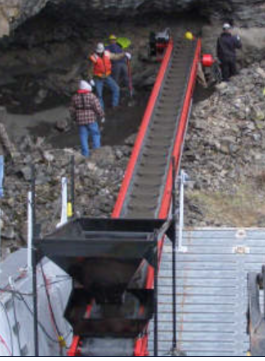

When large amounts of dirt, soil, sand, gravel, or other loose materials need to be moved, hauling everything by hand can quickly become inefficient. Dirt conveyors provide a practical way to transport bulk materials across a job site while reducing manual labor and keeping projects moving.
Dirt conveyors are portable material handling systems designed to move loose materials over distances or around obstacles. Depending on the application, they can be used in construction, landscaping, excavation, demolition, and other industries where dirt and aggregate need to be moved efficiently.
Construction
Construction sites are one of the most common applications for dirt conveyors. During excavation, grading, foundation work, and site preparation, crews may need to move large quantities of soil from one location to another.
A dirt conveyor can help transport excavated material away from foundations, trenches, basements, and other confined areas. Instead of relying entirely on wheelbarrows or heavy equipment, workers can use a conveyor to create a continuous flow of material.
This can be particularly useful when space is limited or when traditional equipment cannot easily access the work area.
Basement and Foundation Excavation
Basement excavation presents a unique material handling challenge. Dirt, gravel, and construction debris often need to be moved out of an excavation area with limited access.
Portable dirt conveyors can be positioned to carry material from below ground level to a truck, dumpster, or designated collection area. This allows excavation crews to move material without repeatedly carrying loads up stairs, ramps, or other access points.
Dirt conveyors are also useful during foundation projects, where excavated soil needs to be continuously removed as crews work.
Landscaping
Landscaping companies frequently handle soil, mulch, gravel, sand, and other bulk materials. Moving these materials across a property can require significant physical effort, especially when the work area is difficult to access.
A dirt conveyor can help move material across yards, around buildings, or up inclines. Landscapers can use conveyors for applications such as:
- Moving topsoil
- Transporting mulch
- Spreading gravel
- Moving sand
- Handling fill material
- Removing unwanted soil
By creating a more efficient material flow, conveyors can help landscaping crews spend less time manually transporting materials.
Excavation
Excavation contractors regularly need to remove large amounts of soil from trenches, foundations, utility projects, and other work areas.
Dirt conveyors can provide a continuous method for moving excavated material away from the digging area. They can be especially valuable on projects where access for loaders, dump trucks, or other large equipment is restricted.
For trenching and utility work, portable conveyors can help move material away from the excavation while allowing crews to continue working in the trench.
Demolition
Demolition projects generate more than just building debris. Depending on the project, crews may also need to move dirt, sand, gravel, concrete fragments, and other loose materials.
Dirt conveyors can help move material through or away from demolition areas. Their compact and portable design can make them useful when working in locations where larger material handling equipment is difficult to maneuver.
Swimming Pool Construction
Installing an in-ground swimming pool involves substantial excavation. Once the soil is removed, it has to be transported away from the excavation site.
A dirt conveyor can provide an efficient way to move excavated soil from the pool area to a truck, trailer, or other collection point. This can be especially helpful in residential backyards where access for heavy equipment may be limited.
Conveyors can also help move sand and other materials into the excavation during later stages of construction.
Utility and Trenching Projects
Water lines, sewer lines, electrical installations, and other underground utility projects often require crews to excavate long trenches.
The excavated soil needs to be moved away from the work area, and depending on the location, there may not be enough room for conventional equipment.
Portable dirt conveyors can be positioned alongside trenches to move soil efficiently. They can also help reduce the amount of manual material handling required by workers.
Mining and Aggregate Applications
Dirt conveyors can also be used for certain smaller-scale mining, quarrying, and aggregate handling applications. Materials such as dirt, sand, gravel, and other loose aggregates can be transported from one location to another using a conveyor system.
For larger operations, heavy-duty stationary conveyor systems are typically used. However, portable conveyors can be valuable for temporary projects, smaller work areas, or applications where equipment needs to be repositioned frequently.
Why Use a Dirt Conveyor?
Across these industries, dirt conveyors offer several advantages. They provide a continuous method of moving material and can help reduce the physical effort involved in transporting heavy loads.
Depending on the application, a dirt conveyor can help:
- Reduce manual labor
- Move material over obstacles
- Reach confined or difficult-to-access areas
- Create a continuous material flow
- Reduce the need for wheelbarrows
- Improve job-site efficiency
- Transport material over longer distances
The right conveyor depends on the type of material being moved, the distance it needs to travel, the available space, and the required capacity.
Choosing the Right Dirt Conveyor
Before selecting a dirt conveyor, consider the specific requirements of your project. Material type, conveyor length, width, incline, portability, and available power are all important factors.
A conveyor used for moving soil out of a basement may have different requirements than one used for transporting gravel across a construction site. Understanding the application first makes it easier to choose a conveyor that can handle the job.
For contractors, landscapers, excavation crews, and other professionals, a dirt conveyor can be a valuable addition to a material handling operation. Instead of repeatedly moving loose materials by hand, a conveyor creates a more efficient way to keep material moving.
Keep Dirt and Loose Materials Moving
From construction and excavation to landscaping and pool installation, dirt conveyors can be used in a wide variety of industries. Their portability and ability to move loose materials through challenging spaces make them particularly useful for temporary jobs and projects where conventional equipment may not be practical.
When the job involves moving dirt, soil, sand, gravel, or similar materials, a portable conveyor can help make the material handling process faster, easier, and more efficient.
Check out our Dirt Conveyors!