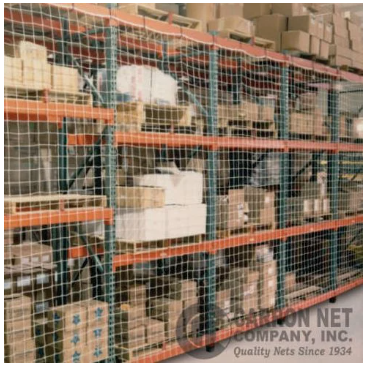

Pallet rack netting is a durable mesh barrier installed on the back or sides of pallet racking systems. Its primary purpose is to prevent products from falling off racks, especially in high-bay storage environments where items are stored several levels high.
When products are accidentally pushed too far or become unstable, the netting acts as a containment system—stopping items before they fall into aisles or work zones. This is critical, as falling objects are a major source of workplace injuries in warehouses.
Why Pallet Rack Netting Matters
Warehouses are fast-paced environments with constant forklift traffic, product movement, and stacking. Even with careful handling, accidents can happen. That’s where rack netting proves its value.
1. Improves Workplace Safety
The biggest benefit is clear: protecting employees. Netting helps prevent falling products from striking workers below, especially in picking aisles or near pedestrian zones.
2. Reduces Product Damage
Dropped inventory doesn’t just create hazards—it also leads to costly losses. Netting catches items before they hit the ground, helping preserve product integrity.
3. Supports OSHA & Safety Compliance
While not always mandatory, pallet rack netting helps facilities meet general safety standards and reduce liability exposure by proactively addressing fall risks.
4. Maintains Workflow Efficiency
Unlike solid barriers, netting allows for visibility and airflow. Workers can still see inventory, and operations continue without obstruction.
Types of Pallet Rack Netting
Not all netting is the same. A Plus Warehouse offers options designed to fit different layouts and safety needs.
Vertical Netting
Installed along the back or sides of racks, vertical netting prevents items from falling into aisles or adjacent workspaces. This is the most common configuration.
Horizontal Netting
Mounted beneath rack levels, horizontal netting catches items that may fall through gaps in shelving or pallet supports.
Modular vs. Full-Bay Systems
- Modular netting covers individual rack openings and is easy to install or reposition.
- Full-bay netting spans entire rack sections for broader protection but may require more setup time.
Key Features to Look For
When choosing pallet rack netting from A Plus Warehouse, consider these important factors:
- Load capacity: Ensure the netting can handle the weight of potential falling items
- Mesh size: Smaller mesh for smaller items; larger mesh for pallets and bulk goods
- Attachment style: J-hooks, cable ties, or sliding systems for easy installation
- Material durability: High-strength nylon or polypropylene for long-term use
For example, the A Plus Warehouse Pallet Rack Netting offers a durable, high-capacity solution designed to protect both workers and stored goods in demanding environments.
Where to Use Pallet Rack Netting
Pallet rack netting is ideal for a wide range of applications, including:
- Warehouse picking aisles
- Distribution centers
- Manufacturing facilities
- Retail backrooms
- Any area with elevated pallet storage
It’s especially important in areas with high foot traffic or where employees regularly work near racking systems.
Easy Installation, Immediate Impact
One of the biggest advantages of pallet rack netting is how easy it is to implement. Most systems attach directly to existing racking with minimal tools, meaning you can upgrade safety without a major overhaul.
Once installed, the benefits are immediate—reducing risk, improving confidence among workers, and protecting valuable inventory.
Final Thoughts
Pallet rack netting is a simple solution that delivers significant results. In a warehouse environment where safety and efficiency go hand in hand, adding netting to your racking system is a smart investment.
Check out our Pallet Rack Netting!