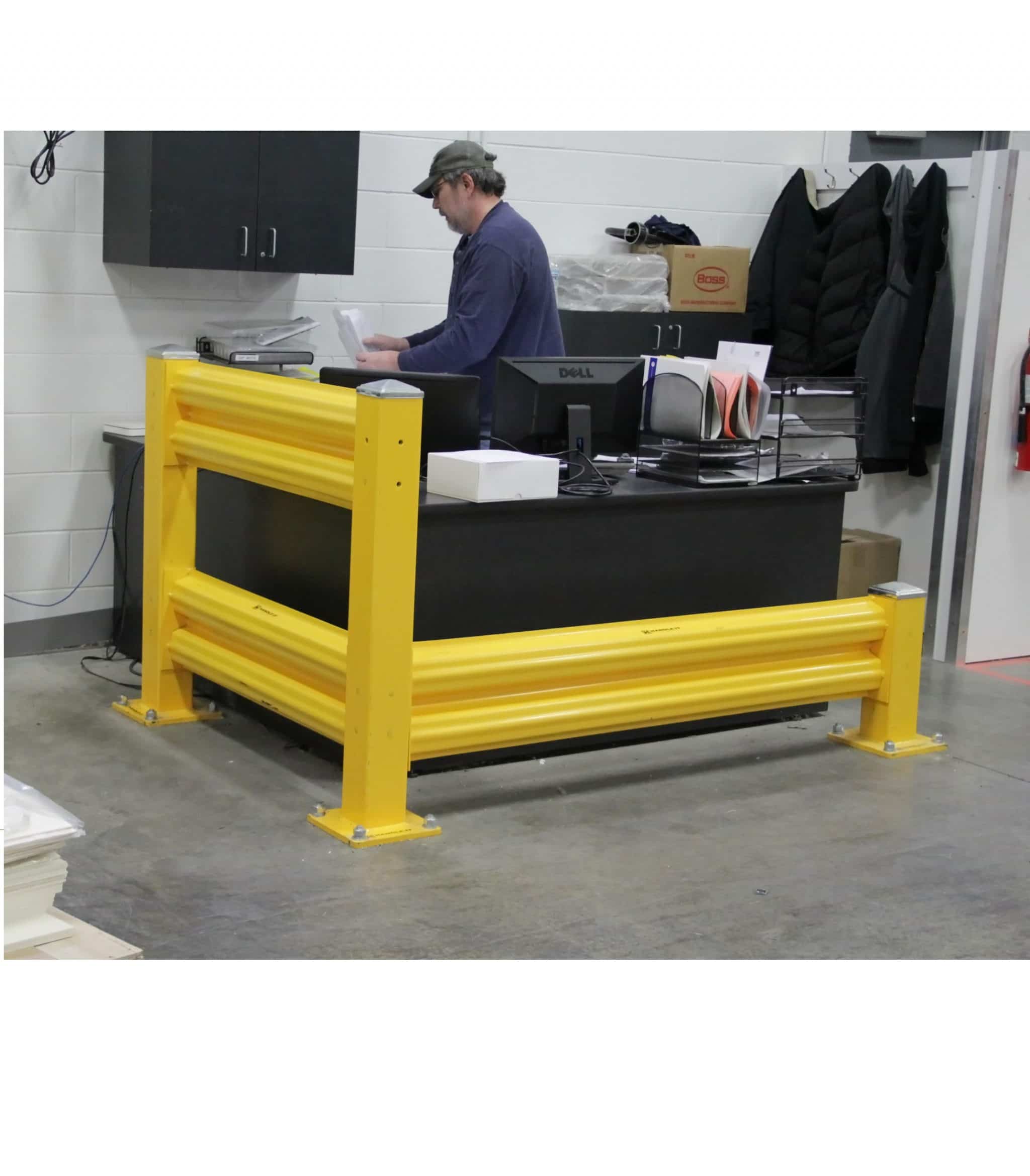

Guard rails are an important safety solution for warehouses, manufacturing facilities, loading docks, construction sites, and other industrial environments. Designed to create a physical barrier between people, equipment, and hazards, guard rails help protect employees, inventory, machinery, and building structures from accidental impacts and falls.
Whether you need to protect a pedestrian walkway, separate forklift traffic, or prevent equipment from striking a wall or piece of machinery, guard rails provide a durable layer of protection.
What Is a Guard Rail?
A guard rail is a protective barrier designed to prevent people or equipment from entering a hazardous area or coming into contact with a potential danger. Guard rails can be made from steel, aluminum, or other durable materials, depending on the application.
In warehouses, guard rails are often installed around areas that need additional protection from forklifts, pallet jacks, carts, and other material handling equipment. They can also be used to create designated pedestrian areas and protect valuable equipment.
Guard rails are available in a variety of styles, sizes, and configurations, making it possible to select a system based on the hazards and layout of a facility.
Where Are Guard Rails Used?
Guard rails can be used in many different industrial and commercial applications. Some common locations include:
Warehouses
Forklifts and other powered equipment can create significant hazards in busy warehouse environments. Guard rails can help protect shelving, machinery, walls, doors, and pedestrian areas from accidental impacts.
Loading Docks
Loading docks are areas where employees, forklifts, trucks, and materials are constantly moving. Guard rails can help define safe areas and protect dock doors, walls, equipment, and workers.
Manufacturing Facilities
Manufacturing equipment and production lines can be expensive to replace or repair. Guard rails can create a physical barrier around machinery, work areas, and other sensitive equipment.
Pedestrian Walkways
Separating people from moving equipment is an important part of warehouse safety. Guard rails can establish clearly defined pedestrian pathways and help keep employees away from forklift traffic.
Parking Lots and Outdoor Areas
Heavy-duty guard rails can also be used outdoors to protect buildings, loading areas, storage areas, and other structures from vehicle or equipment traffic.
What Do Guard Rails Protect?
One of the biggest benefits of guard rails is their versatility. They can be used to protect both people and property.
Depending on the installation, guard rails can help protect:
- Employees and pedestrians
- Warehouse shelving
- Pallet racks
- Machinery and production equipment
- Loading dock doors
- Building walls and columns
- Electrical equipment
- Storage areas
- Workstations
- Inventory
- Designated walkways
Installing a guard rail in the right location can help prevent an accident before it happens.
Guard Rails vs. Handrails
Although the terms are sometimes used interchangeably, guard rails and handrails serve different purposes.
Guard rails are primarily designed as a protective barrier. Their purpose is to prevent people or equipment from entering an area or coming into contact with a hazard.
Handrails are designed to provide support for people, particularly when walking on stairs, ramps, platforms, or other elevated surfaces.
The right type of rail depends on what you are trying to protect and the specific requirements of your application.
Common Types of Guard Rails
Guard rail systems come in several configurations. The best option depends on the environment and the type of traffic or hazard being controlled.
Steel Guard Rails
Steel guard rails are commonly used in demanding industrial environments. They provide a strong barrier for areas exposed to forklifts, vehicles, and other heavy equipment.
Floor-Mounted Guard Rails
Floor-mounted rails are secured directly to the floor and can be installed around equipment, walkways, storage areas, and other locations requiring protection.
Posts and Rail Systems
Some guard rail systems consist of individual posts connected by horizontal rails. These systems can be configured to create straight barriers, corners, and enclosed areas.
Removable Guard Rails
Removable systems can be useful when access to an area is occasionally required. Sections can be removed or repositioned when necessary while still providing protection during normal operations.
Why Are Guard Rails Important?
Warehouses and industrial facilities can have a lot of moving equipment and potential hazards. Even experienced forklift operators and employees can make mistakes.
A guard rail provides a physical line of defense between a hazard and the people or equipment that need protection. Rather than relying solely on signs, painted lines, or employee awareness, a physical barrier helps prevent equipment from entering a protected area.
Guard rails can also help organizations maintain a more organized facility by clearly separating traffic lanes, pedestrian walkways, storage areas, and restricted zones.
Choosing the Right Guard Rail
Before selecting a guard rail, consider the environment where it will be installed and what you need it to protect.
Important factors include:
- Location: Will the rail be used indoors or outdoors?
- Traffic: Will forklifts, pallet jacks, trucks, or pedestrians be nearby?
- Protection: What equipment, structure, or area needs to be protected?
- Available space: How much room is available for the rail system?
- Mounting: What type of floor or surface will the rail be installed on?
- Configuration: Do you need a straight rail, corner, end section, or multiple sections?
- Visibility: Would a highly visible finish make the barrier easier to identify?
Taking these factors into consideration can help you select a guard rail that fits your facility and provides the appropriate level of protection.
Add an Extra Layer of Protection to Your Facility
Guard rails are a simple but effective way to improve safety and protect valuable equipment and infrastructure. From separating forklift and pedestrian traffic to protecting pallet racks, machinery, walls, and loading areas, the right guard rail can help reduce the risk of accidental damage.
For warehouses, manufacturing facilities, distribution centers, and other industrial environments, guard rails can be an important part of a comprehensive workplace safety strategy.
Check out our Guard Rails!