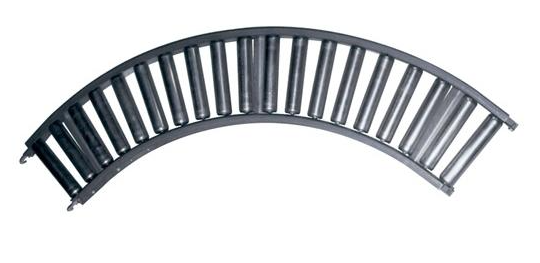

One of the most overlooked factors when selecting a gravity or powered roller conveyor is roller spacing. While conveyor length, width, and capacity often receive the most attention, the distance between rollers can have a major impact on product stability, conveyor performance, and overall efficiency.
Choosing the proper roller spacing helps ensure products move smoothly, reduces the chance of jams, and extends the life of both the conveyor and the items being transported. Here's what you need to know.
What Is Conveyor Roller Spacing?
Roller spacing, sometimes called roller centers, refers to the distance from the center of one roller to the center of the next. This measurement determines how much support a product receives as it travels down the conveyor.
Conveyors are available with a variety of roller spacings depending on the intended application. Closer spacing provides more support, while wider spacing can be suitable for larger, heavier loads.
Why Roller Spacing Matters
Proper roller spacing directly affects how products travel through a conveyor system. If the spacing is too wide for the load being conveyed, products may wobble, tip, or even become lodged between rollers.
Correct roller spacing helps:
- Maintain product stability
- Prevent items from tipping
- Reduce product damage
- Minimize conveyor jams
- Improve material flow
- Increase overall efficiency
A well-matched conveyor allows products to move consistently from one end of the system to the other with minimal operator intervention.
The Three Roller Rule
A common guideline in conveyor design is the "three roller rule." Whenever possible, the shortest item being conveyed should be supported by at least three rollers at all times.
For example, if your smallest carton measures 12 inches long, you'll want roller spacing that allows three rollers to remain underneath the box as it travels.
Following this rule helps prevent products from rocking, bouncing, or getting stuck during transport.
Product Size Makes a Difference
Different products require different levels of support.
Small Boxes and Cartons
Small packages typically require closer roller spacing because they have less surface area contacting the conveyor. Additional rollers provide better stability and smoother movement.
Plastic Totes
Many warehouses use standardized plastic totes, which usually perform well with standard roller spacing. If totes have reinforced bottoms, they can often span wider roller centers without issues.
Pallets
Pallets distribute weight over a larger footprint and generally require fewer rollers supporting the load. However, pallet design is important. Open-bottom pallets or damaged pallets may require additional support.
Irregular Loads
Products with uneven bottoms, flexible packaging, or unusual shapes often benefit from closer roller spacing to reduce movement and maintain stability.
Weight Isn't the Only Factor
It's easy to assume that heavier products always require closer roller spacing, but that's not necessarily the case.
Weight capacity depends on several factors, including:
- Roller diameter
- Roller wall thickness
- Bearing capacity
- Frame construction
- Overall conveyor design
A lightweight but small package may require closer spacing than a much heavier pallet simply because it has less contact with the conveyor.
Powered vs. Gravity Conveyors
Roller spacing is important for both gravity and powered conveyors.
Gravity Conveyors
On gravity conveyors, proper spacing ensures products roll freely without hesitation or tipping. Since gravity is doing the work, stable contact with multiple rollers is especially important.
Powered Roller Conveyors
Powered conveyors rely on motors and drive systems to move products at a controlled speed. Proper roller spacing helps maintain smooth, consistent movement while reducing unnecessary stress on the conveyor components.
Signs Your Roller Spacing May Be Wrong
If you notice any of the following issues, roller spacing could be part of the problem:
- Products tipping over
- Boxes getting stuck
- Excessive bouncing
- Frequent jams
- Damaged packaging
- Operators constantly repositioning loads
- Inconsistent product flow
Addressing roller spacing early can often improve conveyor performance without requiring a complete system replacement.
Planning for Future Needs
When purchasing a new conveyor, think beyond your current products. If your operation may begin handling smaller cartons, different packaging, or new product lines, selecting a conveyor with appropriate roller spacing today can help avoid costly upgrades later.
Discussing your current and future applications with a conveyor specialist can help ensure you choose equipment that continues to meet your needs as your business grows.
Final Thoughts
Conveyor roller spacing may seem like a small design detail, but it plays a critical role in how efficiently your material handling system operates. Proper spacing helps keep products stable, minimizes downtime, reduces damage, and creates a smoother workflow throughout your facility.
Whether you're installing a new conveyor line or replacing existing equipment, taking roller spacing into account can improve productivity and help your conveyor system perform at its best for years to come.
Check out our Conveyor System Accessories!