
In busy warehouse and industrial environments, safety isn’t optional—it’s essential. Equipment like yard ramps and ladders are used daily to move people and materials between elevations, which makes fall prevention a top priority. One of the simplest yet most effective safety features in these applications is the handrail.
From improving stability to meeting safety standards, handrails play a critical role in protecting workers and maintaining efficient operations.
Why Handrails Matter
Handrails are designed to provide a secure grip and help workers maintain balance while walking, climbing, or transitioning between levels. According to OSHA, handrails serve two key purposes:
- They act as a graspable support for stability
- They provide a barrier to help prevent falls
In environments where employees are pushing carts, carrying materials, or working at height, that extra point of contact can significantly reduce the risk of accidents.
Handrails on Yard Ramps
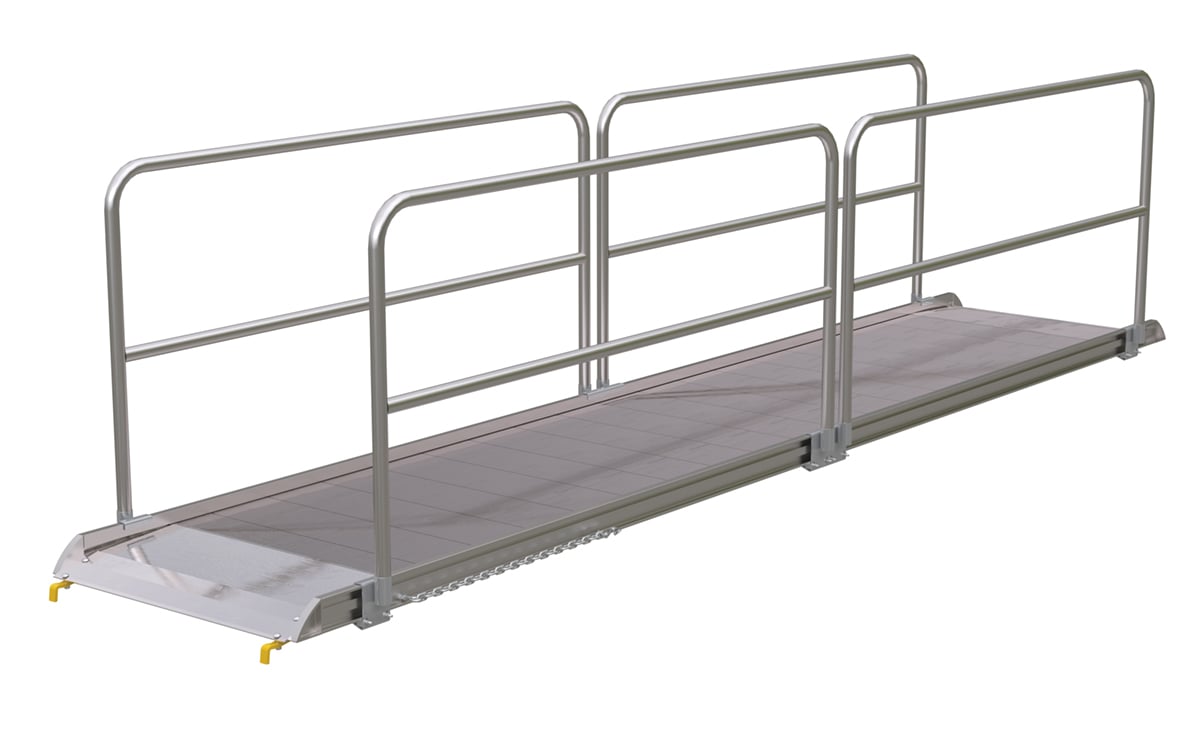
Yard ramps—especially aluminum walk ramps with handrails—are designed to create safe, gradual transitions between ground level and loading docks. Products like aluminum walk ramps with handrails offer both mobility and safety for workers handling carts and equipment.
Key Benefits:
- Improved Stability: Handrails allow workers to maintain balance when walking up or down an incline.
- Safer Material Handling: Employees can guide carts while keeping a hand on the rail for control.
- Reduced Fall Risk: Ramps can become slippery or uneven; handrails provide a reliable support system.
Many aluminum walk ramps are engineered with varying lengths and load capacities to accommodate different height ranges and weight requirements, ensuring safe use across applications.
Additionally, OSHA requires ramps and walking-working surfaces to be designed to support intended loads and minimize hazards such as slipping or falling—making handrails a smart (and often necessary) addition.
Handrails on Ladders
Ladders—especially rolling and platform ladders—are another area where handrails are essential. Leading manufacturers like Ballymore incorporate handrails and guardrails into their ladder designs to enhance safety and usability.
Why They’re Critical:
- Three Points of Contact: Handrails help users maintain proper climbing technique.
- Platform Protection: On rolling ladders, handrails surround the platform to prevent falls.
- Worker Confidence: A stable grip reduces hesitation and improves efficiency.
Modern rolling ladders often feature handrails on both sides, along with guardrails around the platform, creating a secure working environment at height.
OSHA guidelines reinforce this, requiring handrails on mobile ladder stands and platforms to provide stability and fall protection—especially when working at elevated heights.
OSHA Guidelines to Keep in Mind
While specific requirements vary by application, a few consistent standards apply:
- Handrails are typically required on stairs or elevated walking surfaces
- Standard handrail height is generally 30–38 inches
- Rails must be able to withstand at least 200 pounds of force
- Handrails should be easy to grasp and continuously available along the path
These guidelines highlight that handrails aren’t just helpful—they’re often a compliance requirement.
Choosing the Right Equipment
When selecting yard ramps or ladders, look for built-in safety features such as:
- Integrated handrails on both sides
- Non-slip walking surfaces or treads
- Proper load capacity ratings
- Durable materials like aluminum or steel
Products like aluminum walk ramps with handrails and industrial ladders from trusted vendors are designed with these features in mind, helping you meet both safety goals and operational needs.
Final Thoughts
Handrails might seem like a small addition, but they make a big difference. Whether installed on yard ramps or ladders, they provide critical support, reduce fall risks, and help ensure compliance with safety standards.
In a warehouse setting where efficiency and safety must go hand in hand, investing in equipment with proper handrails isn’t just smart—it’s essential.
Check out our walk ramps with handrails!