
Moving heavy loads doesn't always require electricity or expensive powered lifting equipment. In many workshops, warehouses, manufacturing facilities, construction sites, and maintenance departments, manual chain hoists remain one of the most dependable and cost-effective ways to lift heavy materials safely and efficiently.
Whether you're installing machinery, performing maintenance, or lifting equipment into place, a manual chain hoist provides precise control and dependable performance.
What Is a Manual Chain Hoist?
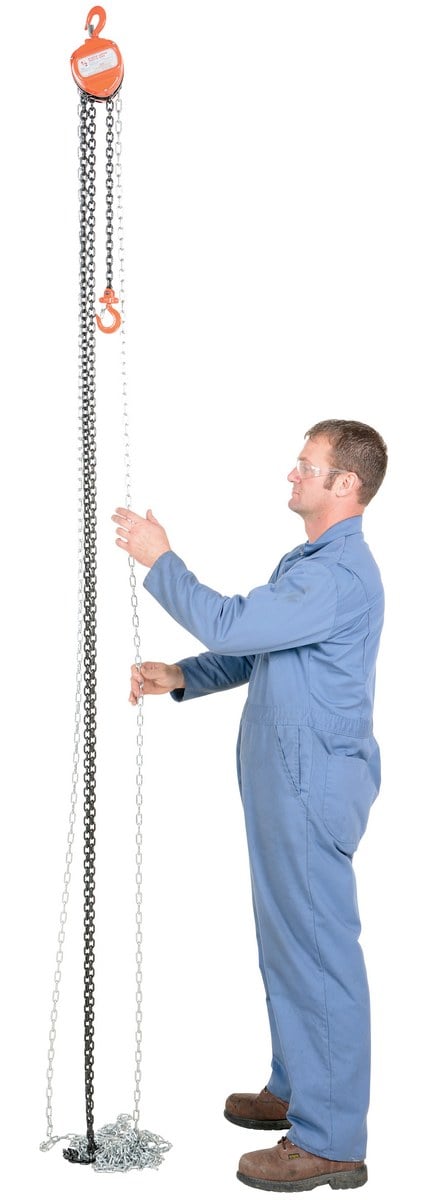
A manual chain hoist is a hand-operated lifting device that uses a chain and gear mechanism to raise and lower heavy loads. The operator pulls a hand chain, which turns internal gears to lift the load chain attached to a hook.
Because they require no electricity, compressed air, or batteries, manual chain hoists can be used almost anywhere an overhead support is available.
Common Applications
Manual chain hoists are used across many industries, including:
- Warehouses
- Manufacturing facilities
- Automotive repair shops
- Machine shops
- Construction projects
- Maintenance departments
- Utility work
- Agricultural operations
They're commonly used for:
- Positioning machinery
- Installing motors and pumps
- Lifting steel beams
- Equipment maintenance
- Loading and unloading heavy components
- Repair work in confined spaces
Benefits of Manual Chain Hoists
No Power Required
One of the biggest advantages is complete independence from electrical power. This makes manual chain hoists ideal for outdoor jobs, remote locations, or facilities where power isn't readily available.
Precise Load Control
Operators can lift loads slowly and accurately, making it easier to position equipment exactly where it's needed. This level of control is especially useful during machinery installation or maintenance work.
Compact Design
Manual chain hoists are relatively small compared to many powered lifting systems. They can often be transported easily between job sites and stored without taking up much space.
Durable Construction
Quality manual chain hoists are designed with hardened steel gears, alloy load chains, and heavy-duty hooks to withstand demanding industrial environments.
With proper maintenance, a manual chain hoist can provide years of dependable service.
Cost-Effective
For facilities that only perform occasional lifting, manual chain hoists often provide all the lifting capability needed without the higher purchase and operating costs of powered hoists.
Choosing the Right Capacity
Selecting the proper lifting capacity is critical for safety.
Common capacities include:
- ½ Ton
- 1 Ton
- 2 Ton
- 3 Ton
- 5 Ton
- 10 Ton
- Higher capacities for specialized applications
Never exceed the rated load capacity of the hoist. It's also important to consider the weight of any lifting fixtures, slings, or attachments when calculating the total load.
Lift Height Matters
In addition to capacity, you'll need to select an appropriate lift height.
Common lift heights include:
- 10 feet
- 15 feet
- 20 feet
- 30 feet
- Custom lift heights for specialized applications
Choose a lift height that allows the load to reach its destination without leaving excessive unused chain hanging below the hoist.
Safe Operating Practices
Manual chain hoists are simple to use, but proper safety procedures should always be followed.
Before every lift:
- Inspect the load chain for wear or damage.
- Check that hooks are not bent or cracked.
- Verify that the safety latches operate correctly.
- Make sure the supporting beam or structure is rated for the load.
- Lift the load slowly to ensure it is balanced.
- Never allow anyone to stand beneath a suspended load.
- Never exceed the hoist's rated capacity.
Routine inspections and regular maintenance help ensure reliable operation and extend equipment life.
Pairing Manual Chain Hoists with the Right Equipment
A manual chain hoist is only one part of a safe lifting system. Depending on your application, you may also need:
- Beam clamps
- Push beam trolleys
- Geared beam trolleys
- I-beams or gantry cranes
- Lifting slings
- Shackles
- Rigging hardware
Choosing compatible lifting equipment creates a complete system that improves both safety and productivity.
When Is a Manual Chain Hoist the Right Choice?
Manual chain hoists are an excellent solution when:
- Electrical power isn't available.
- Lifting is performed occasionally rather than continuously.
- Precise positioning is important.
- Portability is needed.
- Budget-friendly lifting equipment is preferred.
For continuous production environments with frequent lifting cycles, powered electric or air hoists may be a better fit. However, for many maintenance, installation, and repair applications, a manual chain hoist delivers dependable performance with minimal operating costs.
Final Thoughts
Manual chain hoists have been trusted in industrial workplaces for decades because they combine simplicity, durability, and dependable lifting performance. When properly selected, inspected, and maintained, they offer a safe and economical solution for handling heavy loads in a wide variety of applications.
Whether you're outfitting a maintenance department, expanding warehouse capabilities, or supporting construction projects, a manual chain hoist can provide reliable lifting without the need for external power, making it a valuable addition to nearly any material handling operation.
Check out our Chain Hoists!