
As inventory grows and warehouse operations become more demanding, finding enough storage space can become a major challenge. Expanding your facility may seem like the obvious solution, but construction, additional property, and relocation can be expensive and disruptive.
Fortunately, there are several ways to make better use of your existing warehouse space without adding square footage. By improving your storage layout, utilizing vertical space, and investing in the right warehouse equipment, you can increase storage capacity while creating a more organized and efficient workplace.
Here are several ways to maximize warehouse storage space without expanding your facility.
1. Make Better Use of Vertical Storage Space
One of the most common warehouse storage mistakes is overlooking available vertical space. Many facilities have unused overhead room that could be used to store additional inventory.
Installing taller pallet racks allows businesses to take advantage of available ceiling height rather than spreading inventory across the warehouse floor. Depending on your operation, you may also benefit from cantilever racks for long materials, wide-span shelving for bulky products, or multi-level storage systems.
Before making changes, consider your ceiling height, available floor space, forklift capabilities, sprinkler clearances, and applicable safety requirements.
Explore warehouse storage solutions:
2. Choose the Right Pallet Racking System
Not every warehouse needs the same type of pallet racking. Choosing the right configuration can make a significant difference in how much inventory you can store.
Selective pallet racking provides direct access to individual pallets and works well for warehouses with a wide variety of products. Other configurations, including high-density storage systems, can increase pallet capacity by reducing the number of aisles needed.
Consider your inventory turnover, pallet sizes, accessibility requirements, and available warehouse space when selecting a system.
The right pallet rack configuration can help businesses store more products while maintaining an organized inventory system.
3. Improve Your Warehouse Layout
Sometimes the problem isn't a lack of storage equipment but an inefficient warehouse layout.
Wide aisles, poorly positioned shelving, unused corners, and disorganized inventory can all contribute to wasted space. Reviewing your current layout can help identify opportunities to improve storage capacity.
Consider these warehouse organization improvements:
-
Position frequently accessed inventory in convenient locations.
-
Evaluate aisle widths based on equipment requirements and safety.
-
Group similar products together.
-
Identify unused corners and underutilized areas.
-
Separate receiving, storage, picking, and shipping areas.
-
Keep frequently used products accessible to reduce unnecessary movement.
Even relatively small layout adjustments can make a noticeable difference in warehouse efficiency.
4. Use Industrial Shelving for Smaller Inventory
Pallet racking is ideal for storing large quantities of palletized inventory, but smaller products often require a different storage solution.
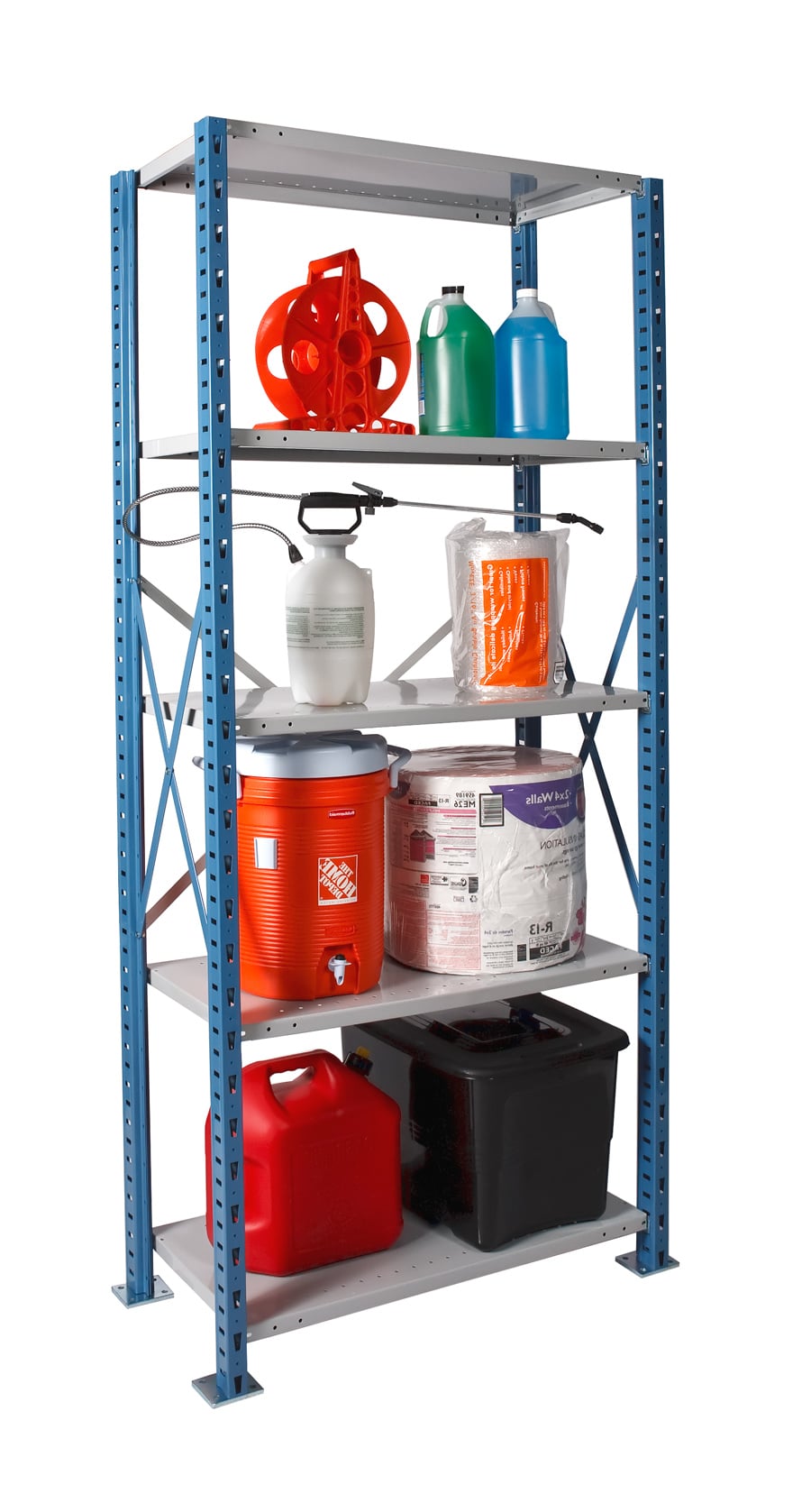
Industrial shelving helps organize individual items, parts, supplies, and smaller containers without taking up unnecessary floor space.
Steel shelving, wire shelving, and wide-span shelving offer different advantages depending on the products being stored.
For heavier or bulkier items, wide-span shelving provides additional capacity while keeping inventory accessible. Smaller components can be organized using shelving with storage bins and dividers.
Using the appropriate shelving system helps prevent wasted space and makes inventory easier to locate.
Browse A Plus Warehouse shelving options to find storage solutions for your facility.
5. Consider Cantilever Racks for Long and Bulky Materials
Storing long, awkward, or oversized materials can be difficult with traditional pallet racks and shelving.
Products such as lumber, steel tubing, pipes, sheet materials, and building supplies often require additional floor space when stored improperly.
Cantilever racks provide an effective solution by using horizontal arms supported by vertical columns. Their open-front design makes it easier to load and retrieve long materials while keeping them organized.
For businesses handling sheet goods, specialized sheet storage racks can also help organize materials and reduce the amount of floor space required.
6. Keep Inventory Organized and Accessible
A warehouse can have plenty of storage equipment and still operate inefficiently if inventory is poorly organized.
Disorganized products take longer to locate, create unnecessary handling, and can lead to wasted storage space.
Consider implementing a consistent inventory organization system. Label shelving and pallet rack locations, group products by category, and make sure employees know where inventory belongs.
Storage bins, cabinets, and organized shelving can also help keep smaller products from becoming scattered throughout the facility.
An organized warehouse makes better use of existing storage capacity and helps employees work more efficiently.
7. Use Mobile Storage Systems
For warehouses that need additional storage density, mobile storage systems may be worth considering.
Mobile shelving and mobile pallet rack systems move along tracks, allowing storage units to be positioned together when not in use. This reduces the number of permanent access aisles required.
Instead of maintaining multiple fixed aisles, mobile systems can provide access to a selected aisle when needed.
These systems can be particularly useful for facilities with limited floor space and large quantities of inventory.
However, accessibility requirements, inventory turnover, and operational needs should all be considered before investing in a mobile storage system.
8. Protect Your Existing Storage Equipment
Maximizing storage space also means protecting the equipment you already have.
Damaged pallet racks, poorly maintained shelving, and unsafe storage configurations can create operational problems and reduce usable storage capacity.
Rack guards, column protectors, end-of-aisle guards, and other protective equipment help reduce the risk of damage from forklifts and other material handling equipment.
Regular rack inspections and prompt repairs are also important for maintaining a safe and efficient warehouse.
9. Reevaluate Your Storage Needs Regularly
Warehouse inventory and business operations change over time. A storage configuration that worked several years ago may no longer be the best option.
Review your inventory levels, product dimensions, order volume, and storage requirements periodically. Look for products taking up more space than necessary and identify opportunities to reorganize existing inventory.
You may discover that a different combination of pallet racks, shelving, cabinets, and storage equipment can provide the additional capacity your business needs.
Maximize Your Warehouse Space with A Plus Warehouse
Expanding your warehouse isn't always necessary to increase storage capacity. With the right equipment and a more efficient layout, businesses can make better use of their existing space while improving organization and productivity.
From pallet racking and cantilever racks to industrial shelving and high-density storage solutions, A Plus Warehouse offers a wide range of products to help businesses create more efficient storage environments.
Whether you're reorganizing an existing facility or looking for ways to accommodate growing inventory, the right storage solution can help you get more out of the space you already have.
Check out our Industrial Shelving!