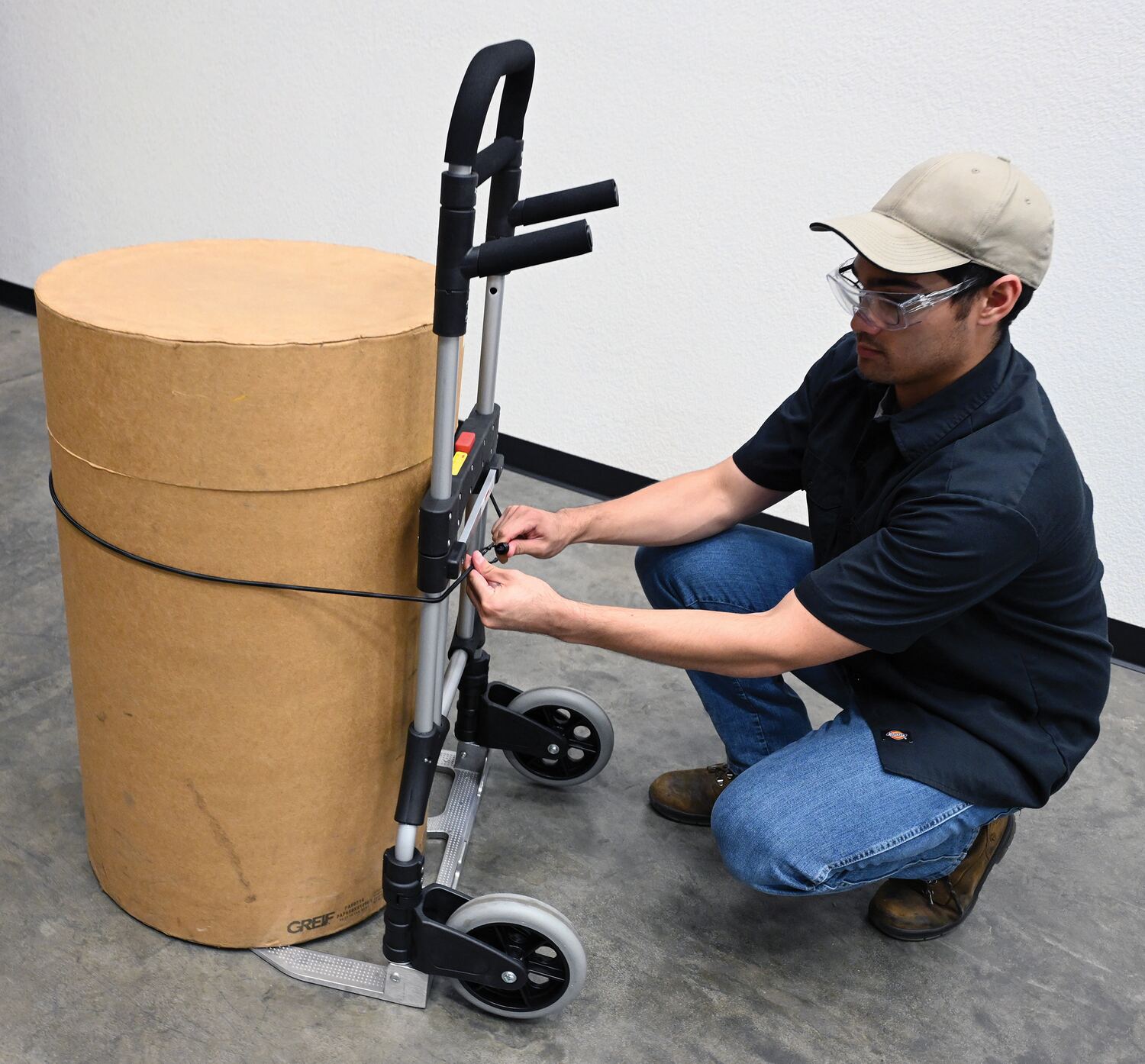

Moving heavy or bulky materials doesn't always require a forklift or powered equipment. For many warehouses, stockrooms, delivery operations, and workplaces, a hand truck is one of the simplest and most effective material handling tools available.
Also known as a dolly or two-wheel truck, a hand truck allows employees to move boxes, containers, appliances, drums, and other loads with less lifting and carrying. With a wide range of styles available, choosing the right hand truck for the job can make material handling easier, safer, and more efficient.
What Is a Hand Truck?
A hand truck is a manually operated material handling device designed to transport loads using two wheels or, in some models, additional wheels and casters. A typical two-wheel hand truck consists of a frame, wheels, handles, and a small platform or toe plate that slides underneath the load.
Once the load is positioned on the toe plate, the operator tilts the hand truck backward and moves the load to its destination.
Hand trucks are popular because they are relatively compact, easy to maneuver, and don't require fuel, batteries, or charging. They can be used in areas where larger material handling equipment simply isn't practical.
Common Types of Hand Trucks
Not every hand truck is designed for the same application. Different models are built around specific loads, environments, and handling requirements.
Standard Hand Trucks
Standard hand trucks are an excellent general-purpose option for moving boxes, cartons, containers, and other common loads. They are frequently used in warehouses, retail facilities, shipping departments, and delivery operations.
These models are a good choice when you need a dependable hand truck for everyday material handling.
Appliance Hand Trucks
Appliance hand trucks are designed to help move large, bulky appliances such as refrigerators, washers, dryers, and other oversized items.
They typically feature taller frames and specialized designs that provide additional support for large loads.
Convertible Hand Trucks
Convertible hand trucks provide additional versatility by allowing the truck to be used in different configurations. Depending on the model, a convertible truck may function as both a traditional two-wheel hand truck and a four-wheel platform truck.
This flexibility can be particularly useful when a workplace handles a variety of load sizes and shapes.
Drum Hand Trucks
Moving drums requires equipment designed specifically for cylindrical loads. Drum hand trucks are built to securely handle drums and help operators move them around warehouses, manufacturing facilities, and industrial environments.
Specialized drum trucks can make handling heavy drums considerably easier than trying to move them manually.
Stair-Climbing Hand Trucks
Stair-climbing hand trucks are designed for applications where loads need to be moved up or down stairs. Their specialized wheel arrangements help the operator navigate steps while transporting the load.
They can be useful for delivery operations, construction sites, commercial buildings, and other locations where stairs are part of the normal material handling process.
Folding Hand Trucks
Folding hand trucks are designed for portability and convenient storage. They can be folded down when not in use, making them useful for service technicians, delivery personnel, offices, and other applications where storage space is limited.
Choosing the Right Hand Truck
Before purchasing a hand truck, consider how and where it will be used. A few important factors can help determine which model is best for your application.
Consider the Load Capacity
Start by determining the maximum weight you need to move. Hand trucks are available with different load capacities, so selecting a model rated for your typical loads is important.
Don't choose a truck based solely on the average load. Consider the heaviest load you expect to transport and select equipment with an appropriate capacity.
Consider the Load Size and Shape
The size and shape of your materials can also determine which hand truck you need. Boxes and cartons may work well with a standard model, while drums, appliances, and unusually shaped loads may require specialized equipment.
Pay attention to the size of the toe plate and overall frame dimensions when evaluating a hand truck.
Think About Your Wheels
Wheels have a major impact on how a hand truck performs. Pneumatic wheels can provide good shock absorption and are useful for some outdoor applications, while solid wheels eliminate concerns about flat tires.
Other wheel configurations may be designed for stairs, smooth warehouse floors, or specialized applications.
Consider Your Environment
Where will the hand truck be used?
A warehouse with smooth concrete floors may have different requirements than a construction site, loading dock, or outdoor delivery route. Consider the floor surface, available space, inclines, stairs, and other obstacles the hand truck may encounter.
Look at Ergonomics
The right hand truck should make moving materials easier rather than creating additional strain. Features such as comfortable handles, appropriate wheel placement, and a design that allows loads to be moved with good leverage can improve the operator's experience.
Benefits of Using Hand Trucks
Hand trucks offer several advantages for everyday material handling.
Reduce manual lifting: A hand truck allows employees to move multiple items or heavy loads without carrying them by hand.
Improve productivity: Moving several boxes at once can reduce the number of trips required to transport materials.
Save space: Hand trucks have a relatively small footprint compared with forklifts and other powered equipment.
Easy to maneuver: Their compact design makes them useful in narrow aisles, stockrooms, loading areas, and other confined spaces.
No power required: Manual hand trucks don't require batteries, fuel, or charging stations.
Versatile: With specialized models available for appliances, drums, stairs, and other applications, there is a hand truck for many different material handling needs.
Hand Trucks for Warehouses and More
Hand trucks are a basic piece of material handling equipment, but that doesn't mean they're one-size-fits-all. Choosing a model based on your load, capacity requirements, wheels, environment, and application can make a significant difference in how efficiently materials are moved.
From standard warehouse hand trucks to convertible models, appliance trucks, drum trucks, and stair-climbing designs, the right hand truck can provide a practical solution for moving materials throughout your facility.
If your employees regularly move boxes, equipment, containers, or other heavy materials by hand, a hand truck can be a simple way to make the job easier and improve material handling efficiency.
Check out our Hand Trucks!