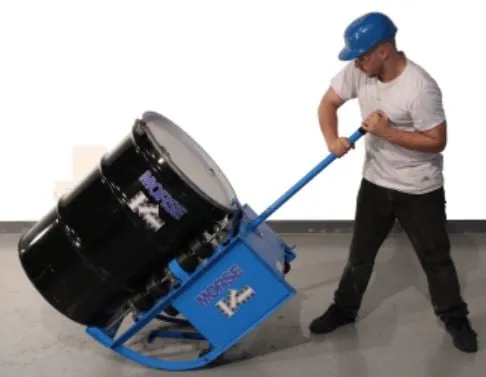

Drums are used across a wide range of industries to store and transport liquids, powders, coatings, and other materials. When those contents need to be mixed or kept uniform, manually rotating heavy drums can be time-consuming and physically demanding. Drum rollers offer an efficient solution for rotating drums and supporting consistent mixing in industrial environments.
For manufacturing facilities, warehouses, and production operations, drum rollers can help streamline processes, reduce manual handling, and improve productivity.
What Are Drum Rollers?
Drum rollers are industrial machines designed to rotate drums during mixing, blending, or other processing operations. Depending on the model, drums rest on powered rollers that turn the container at a controlled speed. This movement helps agitate the contents without requiring an employee to manually rotate the drum.
Drum rollers are available in different configurations to accommodate specific drum sizes, weights, and applications. Selecting the appropriate equipment depends on the material being handled and the desired mixing results.
Benefits of Using Drum Rollers
1. Improve Mixing Consistency
Some materials need to be mixed periodically to maintain uniformity or combine ingredients before use. Drum rollers provide controlled rotation that can help blend compatible materials inside a closed drum. This is particularly useful for applications involving certain paints, coatings, and industrial compounds.
The appropriate rotation speed and mixing duration depend on the material and the manufacturer's recommendations.
2. Reduce Manual Drum Handling
Industrial drums can be heavy and difficult to maneuver. Manually rolling or rotating them may expose employees to unnecessary physical strain and handling risks.
Drum rollers automate the rotation process, reducing the need for workers to manipulate drums by hand during mixing operations. This can help create a more efficient workflow while supporting workplace safety.
3. Increase Operational Efficiency
In production environments where drums must be mixed regularly, manually handling each container can slow down the workday. Drum rollers provide a repeatable process that can reduce the time and effort required for routine mixing tasks.
By incorporating drum rollers into an existing workflow, businesses can help employees focus on other production and material-handling responsibilities.
4. Support a Variety of Industrial Applications
Drum rollers can be useful in manufacturing plants, chemical processing facilities, paint and coating operations, and other industrial settings. They are particularly valuable when materials need to be agitated before dispensing or further processing.
However, not every drum roller is suitable for every material. Drum construction, contents, temperature, flammability, and chemical compatibility should all be considered before selecting equipment.
5. Help Standardize Production Processes
When a process requires similar mixing conditions from one drum to the next, controlled rotation can help make operations more repeatable. Using the appropriate equipment and established operating procedures can support consistent processing across production batches.
Actual results will vary based on the material's properties, the drum's design, and the mixing requirements.
How to Choose the Right Drum Roller
Before purchasing a drum roller, evaluate your facility's requirements and the types of drums you handle.
Consider the following factors:
-
Drum size and capacity: Confirm that the equipment accommodates the drum dimensions and maximum loaded weight.
-
Rotation speed: Determine whether the material requires slow, controlled rotation or another specified mixing speed.
-
Material compatibility: Verify that the equipment and drum are appropriate for the contents being handled.
-
Operating environment: Consider available floor space, electrical requirements, and any special environmental or safety requirements.
-
Safety features: Look for appropriate drum restraints, guards, emergency stops, and other protective features for the application.
-
Production requirements: Consider how frequently drums need to be mixed and how the equipment will fit into your existing workflow.
For hazardous or flammable materials, confirm that the equipment is specifically rated for the intended environment and application. Follow the manufacturer's operating instructions and applicable workplace safety requirements.
Drum Rollers vs. Manual Drum Mixing
Manual drum mixing may be suitable for certain small-scale tasks, but it can become inefficient when drums are heavy or mixing is performed frequently.
Drum rollers offer a powered alternative that can reduce manual effort and provide controlled, repeatable rotation. For businesses handling multiple drums as part of a regular production process, this can be a practical way to improve workflow.
The best solution depends on the material, batch size, mixing requirements, and available equipment.
Improve Your Drum Handling Process with A Plus Warehouse
Efficient material handling involves more than moving products from one location to another. The right equipment can also help simplify processing tasks, reduce manual effort, and keep industrial operations running smoothly.
Drum rollers provide a practical option for businesses that need controlled drum rotation for mixing and blending applications. By evaluating your drum sizes, materials, and production requirements, you can find equipment suited to your facility.
Looking for drum-handling equipment for your operation? Explore material handling solutions from A Plus Warehouse or call 800-209-8798 to discuss your equipment needs.
Check out our Portable Drum Roller!